

Watch the video
How Impulse Space uses Revel to test as fast as it builds
Overview
Impulse Space is a vertically integrated spacecraft company whose mission is to accelerate humanity's future beyond Earth and advance the orbital economy. Developing propulsion, avionics, RF, optical systems, and more in-house, Impulse operates test programs and facility systems spanning component-level bench tests, full engine stands, vacuum chambers, HVAC, and more. To move at the pace their hardware program demanded, they needed software that didn't force a tradeoff between performance and speed.

The challenge
As Impulse Space scaled its test infrastructure, the team relied on a patchwork of in-house software and disparate hardware platforms. Integrating the wide variety of devices across NI DAQs, IFM industrial hardware, Beckhoff controllers, power supplies, process controllers, and high-speed instrumentation required building and maintaining bespoke drivers for each.
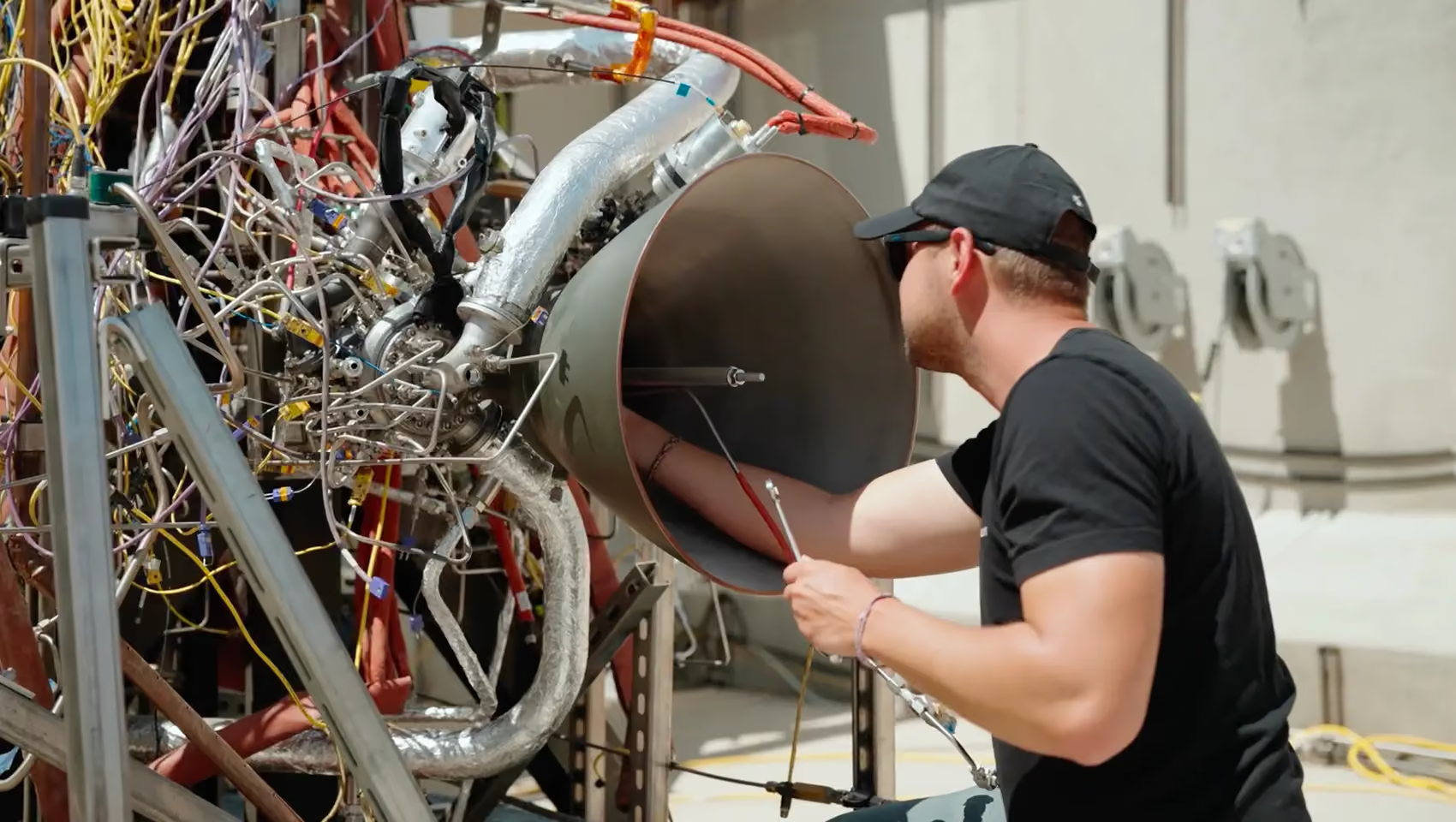
This demanded specialized engineers with expertise in real-time operating systems and low-level protocols, and that dependency created a significant bottleneck: any minor change to a test sequence required looping in a member of the test automation team, pulling engineering resources away from higher-value work. Standing up a new test stand took one to three weeks, and first-time deployments on their legacy software took as long as three months. As the team grew, onboarding new engineers to the tooling was slow and difficult. As Braden Grossfeld, Manager of Test Engineering, put it: "If we're blocked, that means we're not testing, which means we can't fly. Unblocking us is how we iterate, how we fly fast, and how we produce good products."
Impulse needed a platform that could keep pace with their hardware program: one that could integrate with any hardware, empower operators to self-serve, and let the whole team iterate at the speed the company demanded.

Before Revel, I worried a lot about a test executing reliably and protecting our hardware. Today I can worry less about the software executing, and just worry about the hardware.
Julia Vyborny
Director of Propulsion — Impulse Space
How Revel delivered
Revel replaced Impulse's fragmented software stack with a unified platform capable of talking to all of their hardware, regardless of vendor or protocol. Where Impulse had previously been constrained to a single DAQ ecosystem, Revel's hardware abstraction layer unlocked the ability to mix National Instruments, IFM, Beckhoff, B&K Precision, TDK-Lambda, Watlow, and other industrial and lab-grade hardware in the same system. By supporting lower-cost, readily available industrial hardware, Impulse no longer had to wait on long lead times or pay a premium for specialized equipment, and new devices could be auto-detected and added without a software engineer in the loop.
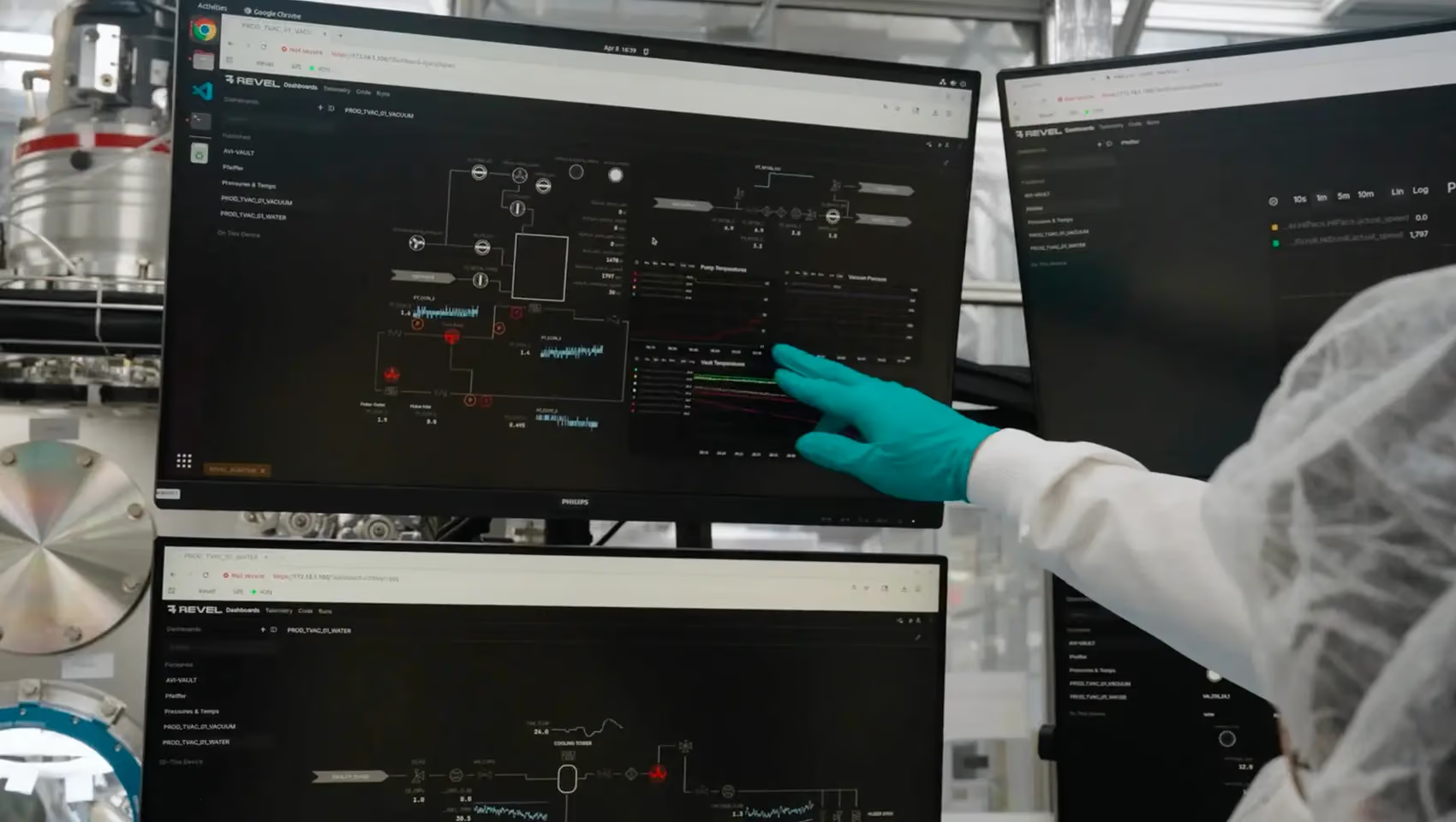
Revel's browser-based GUI meant the team could operate test stands from a laptop, iPad, or phone over a network, eliminating the need for dedicated workstations and making control more flexible across the facility. Setting up a new stand became an intuitive drag-and-drop process that anyone on the team could learn in a matter of hours. Trevor Hanken, Manager of Test Automation, described the shift: "Before Revel, if we needed to change something mid-run, it would involve someone on the test automation team making backend changes. Now test engineers can self-serve, which has greatly sped up our test cadence."
Perhaps most importantly, Revel put sequence changes and automation in the hands of test engineers, technicians, and manufacturing teams as opposed to solely software specialists. Engineers could write, modify and deploy test logic themselves, leveraging RevelCode's compiler and runtime-safety assurances that don't sacrifice reliability for speed. Revel's high-cadence data processing and abort logic also gave the team greater confidence during live engine testing, where milliseconds matter. Julia Vyborny, Director of Propulsion, summed it up: "Before Revel, I worried a lot about a test executing reliably and protecting our hardware. Today I can worry less about the software executing, and just worry about the hardware."
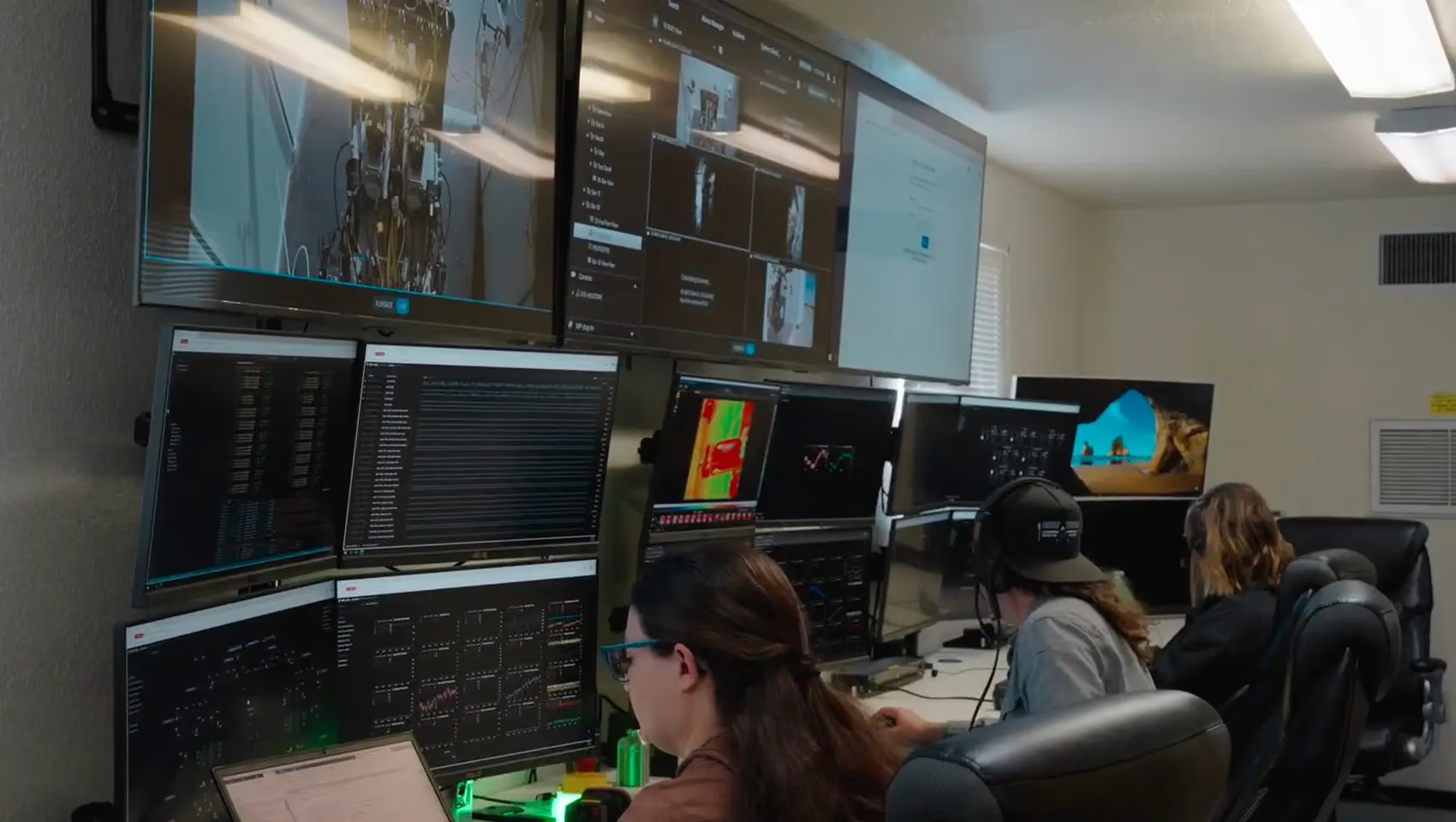
Impulse standardized Revel across hundreds of test and integration assets — engine stands, vacuum chambers, avionics test stands, facility monitoring, and more — creating a single codebase that could be maintained and deployed consistently at scale.
Beyond test operations, Impulse leveraged Revel for facility-wide monitoring and control, including HVAC, utilities, and infrastructure systems that had previously required separate tooling and oversight. With a single platform spanning both test and facilities, the team gained unified visibility across the entire site without adding complexity.
Revel really made things go so much faster — what used to take weeks now takes days. The cost savings have been massive in both people and time, and that has let us keep our focus where it belongs: on our mission.
Dane Sarcone
Principal Test Engineer — Impulse Space
Impact and results
+ 10x faster stand setup
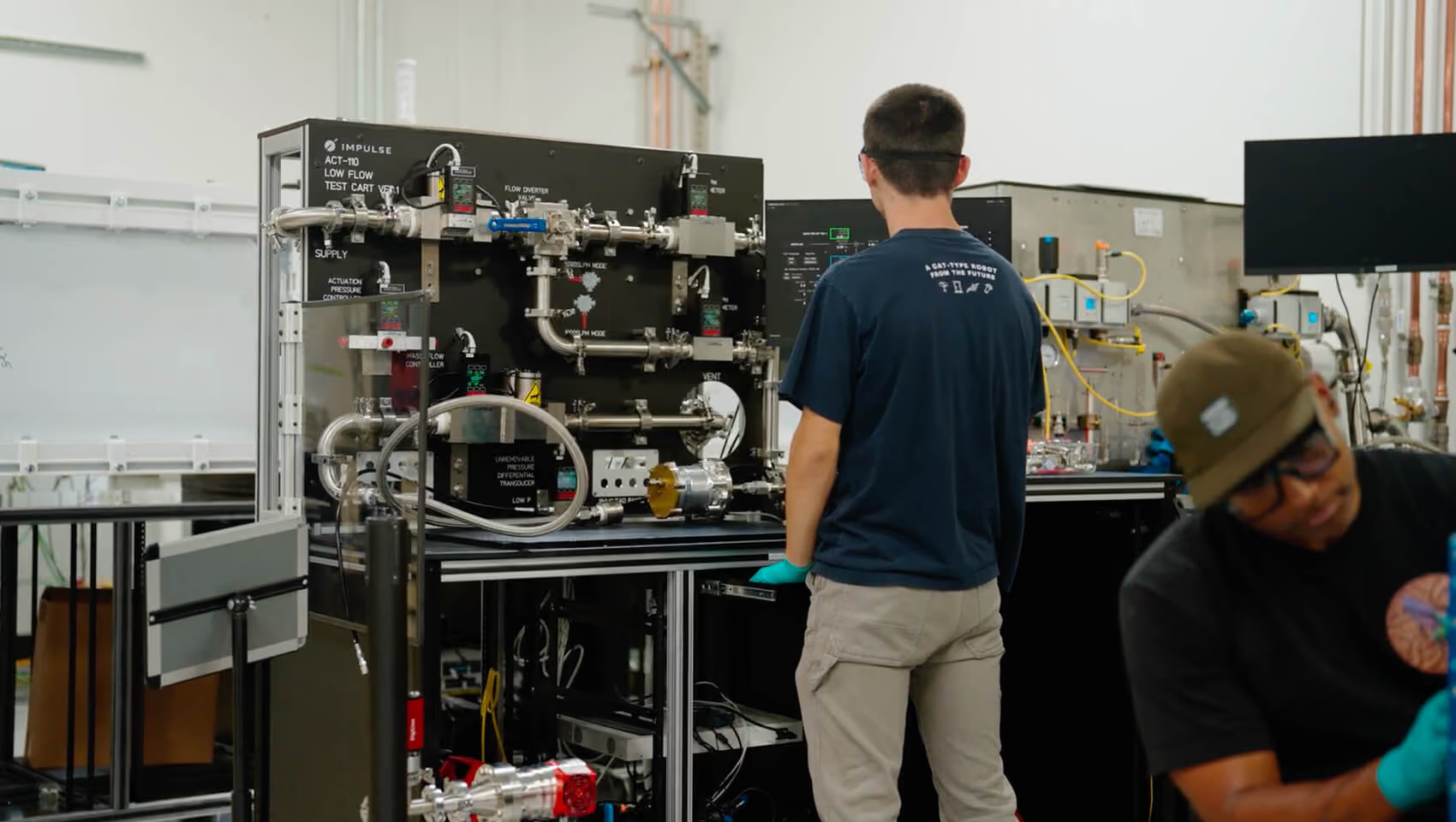
Configuring a new test stand dropped from 1-3 weeks down to 1-3 days, and in some cases, just a few hours.
+ End-to-end operator ownership
Test engineers, technicians, manufacturing teams, and integration teams can now make sequence changes and deploy setups without involving software engineers, enabling multiple test fires per day on active programs.
+ Broader hardware access
Revel unlocked the ability to mix hardware from multiple vendors in a single system, including lower-cost industrial hardware previously incompatible with their stack, resulting in dramatic time savings and cost savings estimated at over 100x on hardware alone.
+ Reliable, high-performance control
Revel's high-speed data monitoring, alerting, and abort logic gave the team the confidence to protect hardware and execute tests reliably, without the freeze-ups that had affected their prior platform.
+ One platform across the company
By standardizing on Revel, Impulse reduced cross-training time, eliminated redundant troubleshooting across test assets, and ensured that fixes and improvements propagated across all systems at once.
+ Easier hiring and scaling
With Revel's higher-level abstraction, Impulse could hire for networking and domain knowledge rather than rare expertise in real-time OS and bespoke driver development.
Dane Sarcone, Principal Test Engineer, captured the overall impact: "Revel really made things go so much faster — what used to take weeks now takes days. The cost savings have been massive in both people and time, and that has let us keep our focus where it belongs: on our mission."