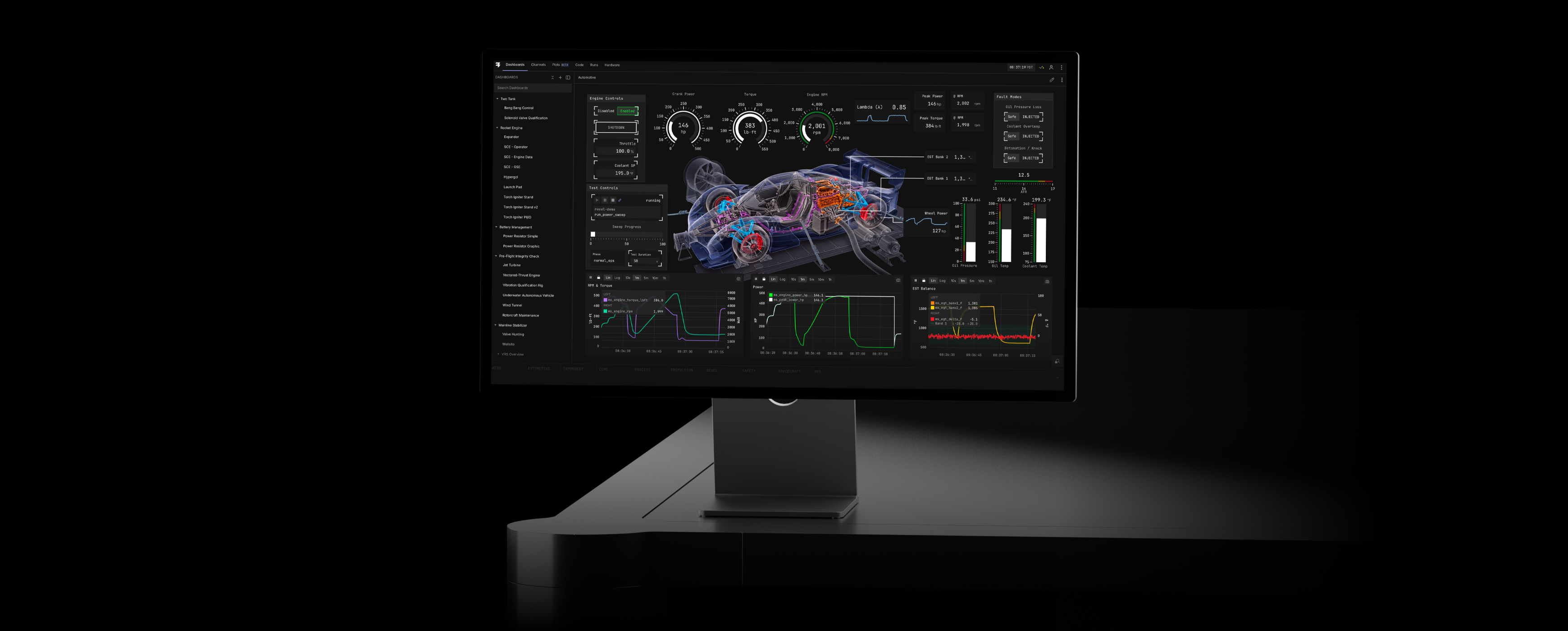
From serial cable to sodium test loops: helping engineers move fast with great software
When I was hired as the IT intern at a local foam manufacturer’s R&D lab in my senior year of high school, I didn’t expect it to change my perspective as much as it did.
I was already somewhat experienced, having led a team of eight students to run IT for our entire school. This was no ordinary student volunteer group: we were so good that the district dropped its contractors. Once, the superintendent called to pull me out of class for three days to image hundreds of laptops. (I guess there are worse calls for a parent to get from a superintendent.)
But then I watched engineers at the R&D lab struggle over and over again to pull temperature data off their process with unreliable serial cables that ran dozens of feet through the ceiling. That opened my eyes to a frustrating reality: plants and labs all across Ohio were still running on decades-old setups, making them unable to move as fast as they wanted.
That experience stuck with me: after studying computer engineering at the University of Akron, I got a job at VMware working on SD-WAN test infrastructure. Then, I spent four years in firmware at Anduril. There was no good off-the-shelf solution for board acceptance testing, so one of the other engineers and I built our own framework on the side from scratch. The two of us eventually managed testing for over 50 boards.
After years of seeing both commercial and in-house software slow engineers down, I was surprised that this area of industry was still absent of innovation. So when I discovered Revel, where the mission is specifically solving test and control, I knew I had to join the team. Today, I write the Rust drivers that talk to equipment over EtherNet/IP, Modbus, CAN, and serial. Not a single piece of that equipment was built to play nice with others, but a device that answers in 2ms the first time and 200ms the next still has to fit inside the same control loop. That fact posed an exciting challenge, which I realized was similar to the one I solved when writing firmware for a microcontroller, except my new goal was to communicate with hundreds of thousands of sensors and I/O points. I could spend a whole career on that and still not run out of edge cases, which goes to show the kind of intensified learning environment I’ve been in over the past 1.5+ years at Revel.
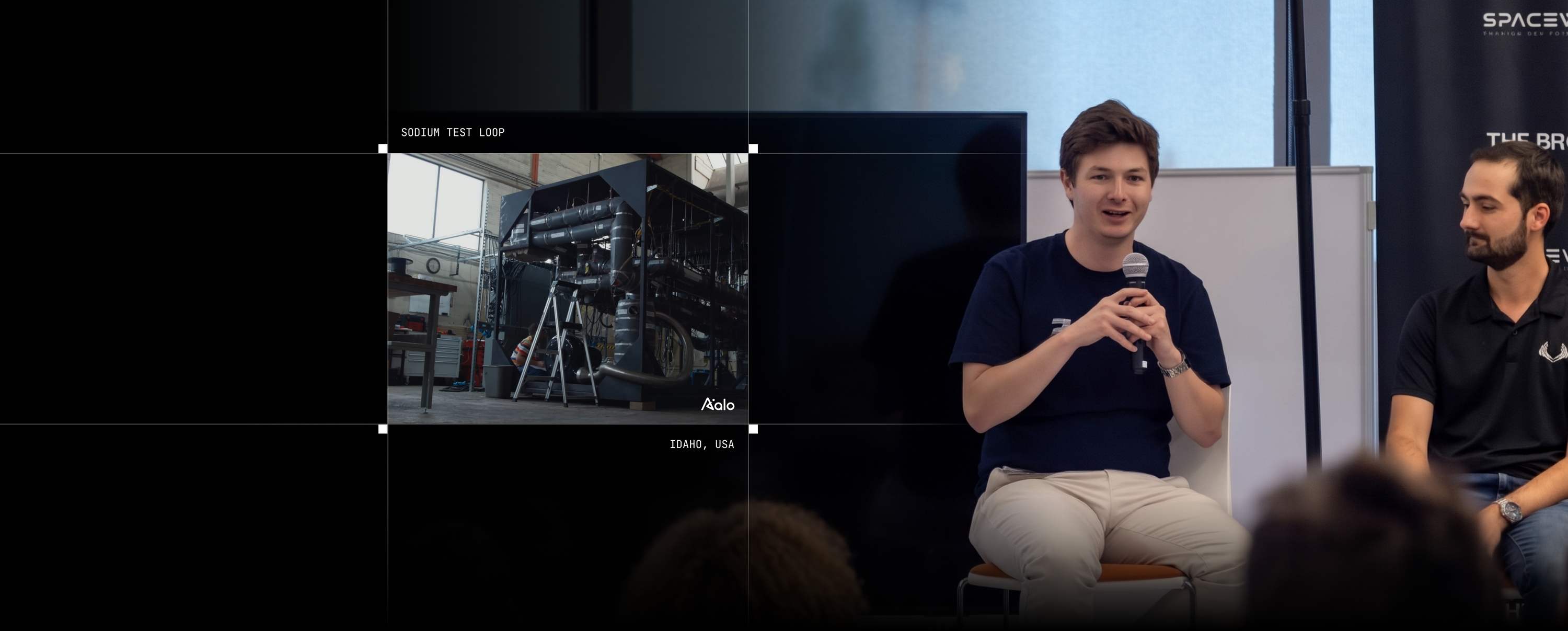
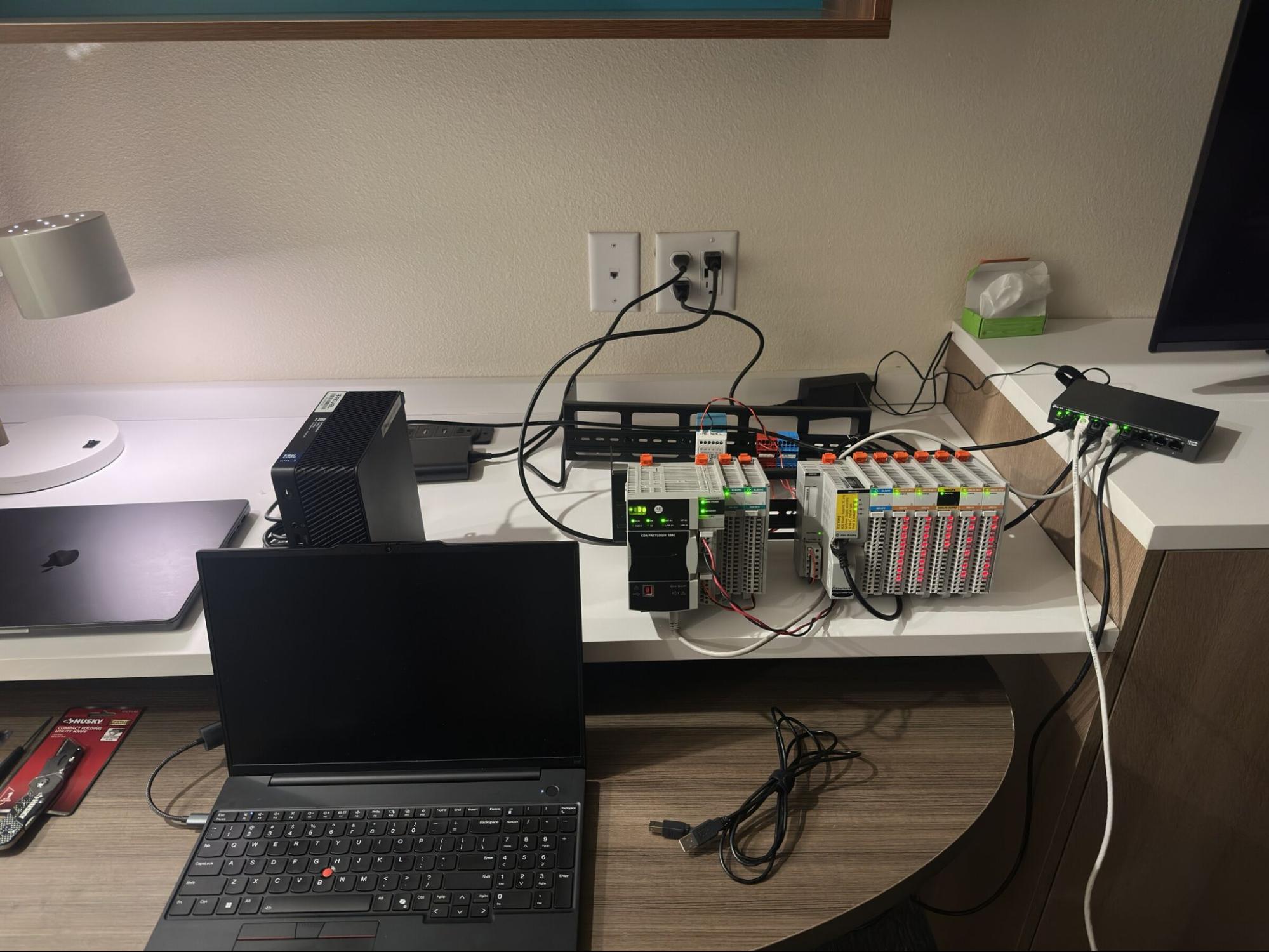
Recently my team and I flew out to Idaho to Aalo Atomics, a startup working on mass-manufactured nuclear power plants. Over just a few days, we helped them rip out their PLC in record time and run a molten sodium loop with Revel. Working alongside Ben Anderson, Aalo’s I&C Engineer, we saw that the I/O modules had almost no documentation. So we sat and watched the wire while the old PLC configured. From there, we read each module to put the protocol together, piece by piece. We wanted to make as much progress as possible, so we wrote the driver that same night on the desk of our hotel room. The late night was worth it: our driver ran on the real hardware the next day.
By the end of our short time in Idaho, Ben was basically self-sufficient with Revel. He was able to run an entire test, understand exactly what was going on, and fix issues quickly without being bottlenecked by anyone else. Later, Revel was on the critical path when his team took a reactor to criticality on a timeline that left zero room for slowdowns.
Since joining Revel, I’ve had a lot of rewarding moments like that, and I often reflect on my high school internship. The engineers at the foam company just wanted to get their data, test quickly, and keep innovating, but were limited by their outdated stack. Now, I’m helping build the software platform for test and control that helps every engineer move as fast as they want.
If you, like me, ever watched the wire to figure out what an undocumented device wanted, kept old equipment alive at a plant, or built things way above your pay grade as a young person for the fun of it, you should reach out. We’re hiring for people like you, and you can learn more here.