Lessons learned on real hardware
I love solving hard problems, whether that’s aligning engines, writing vehicle integrity tests, or designing and analyzing fluid systems. What I don't enjoy is everything that gets in the way before you can test your hardware: DAQ systems that were never built to talk to each other, drivers written from scratch, or software delays from plumbing it all together by hand.
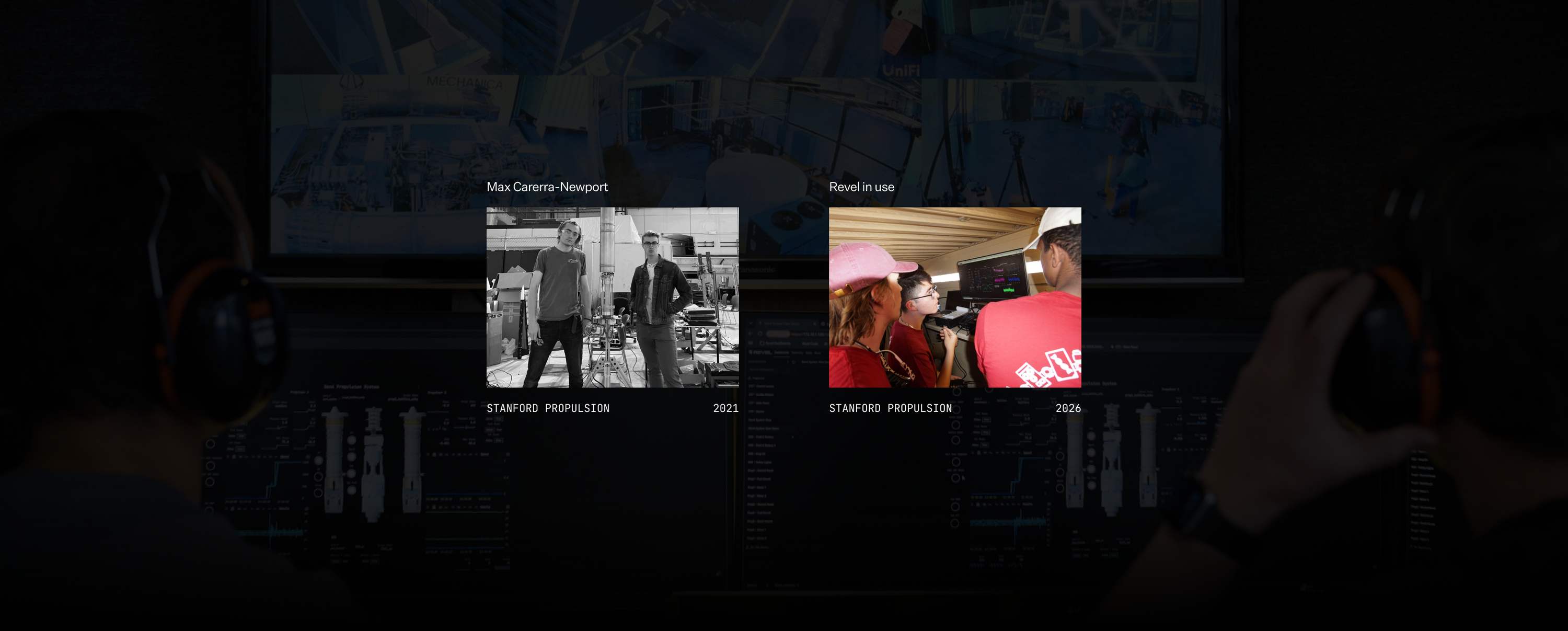
My experience testing hardware goes back to my time at the Stanford Student Space Initiative. My liquid rocketry team built our own groundstation equipment, with a PCB running FreeRTOS. We spent an enormous amount of time on that system, custom drivers and all, when what I actually cared about was the fluid-mechanical side of the engine. That's when I realized how much effort goes into supporting test systems instead of the thing you're actually trying to build.
My work at Relativity Space as the responsible engineer for the propellant estimation system on Terran R reinforced that lesson. Benchtop testing of our delta-pressure transducers became a weeks-long project because I had to coordinate three separate systems just to characterize one differential pressure transducer: a high-accuracy EtherCAT module to read the ducer, a serial-based calibration unit to control the pressure, and a thermal chamber with a separate control system. Automating those disparate systems together and ingesting data from all the streams into a single view was a nightmare.
I was a hardware engineer frustrated by test software. That's exactly why I joined Revel, to build the tool that lets you test what you're building as fast as you can build it.
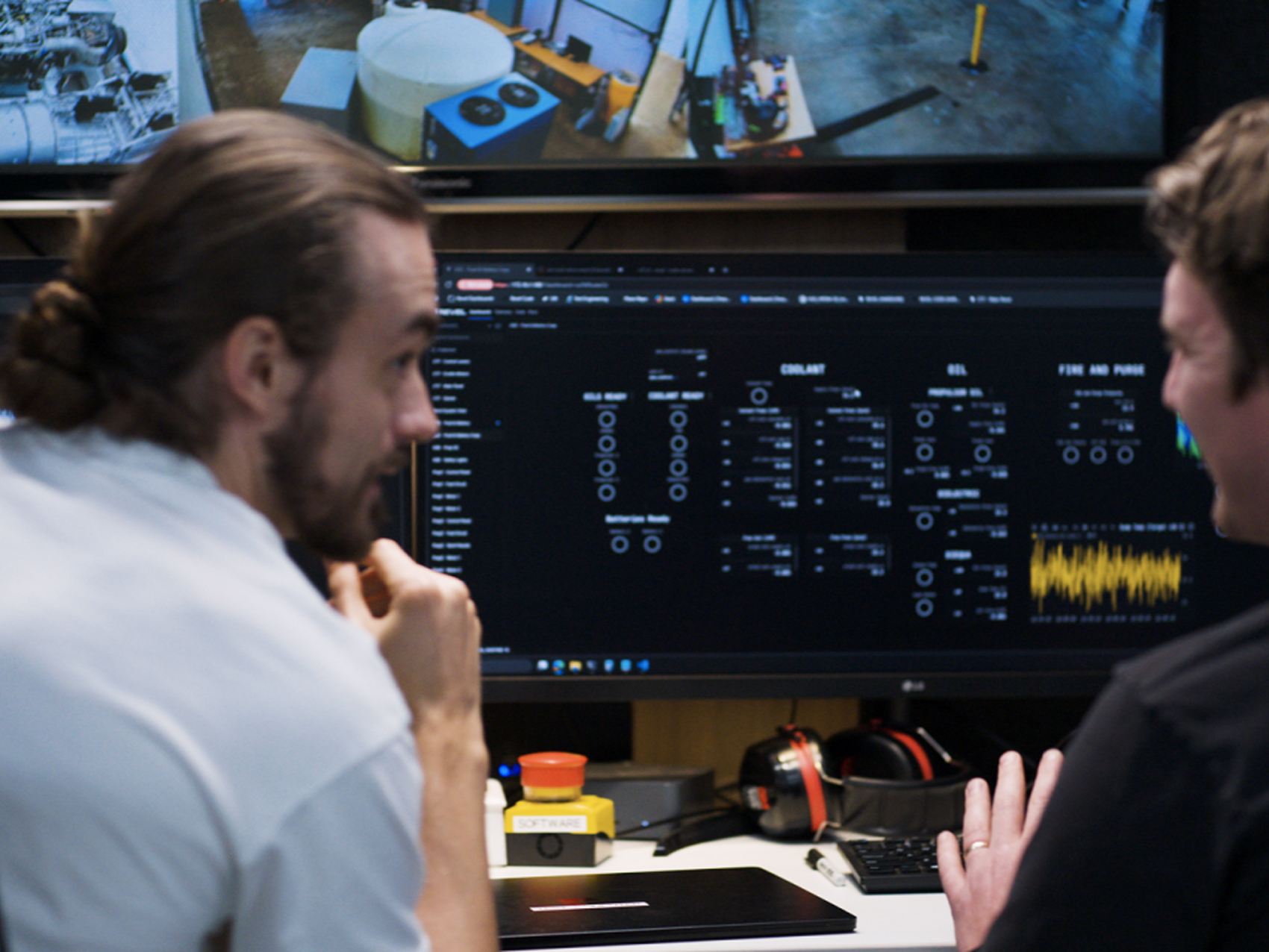
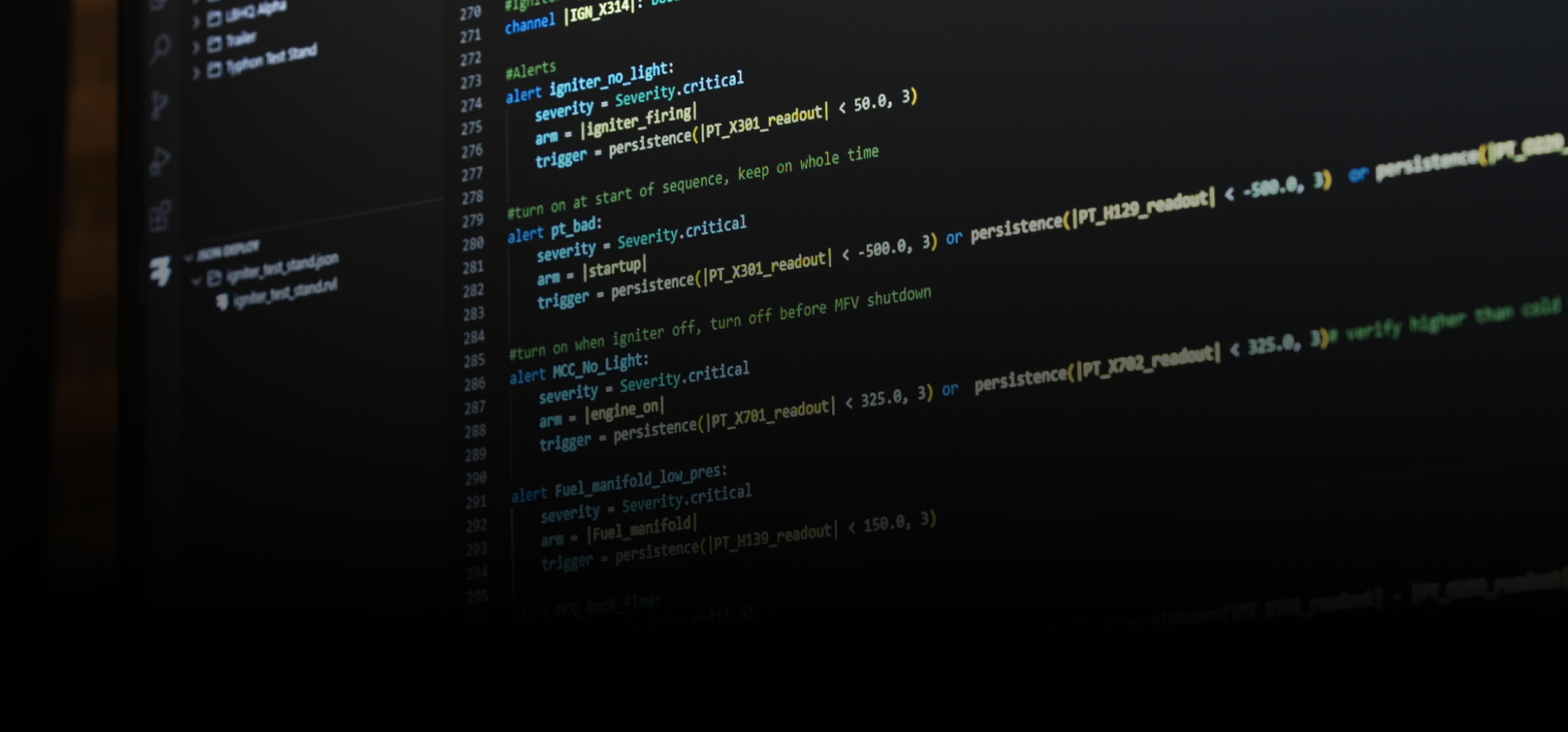
I work on RevelCode, a language built with determinism and common control structures from the start. The language is designed with hardware engineers in mind: you don’t need to be a software expert to get started, but it enables you to write understandable, and safe automation for the system you built. No need to wait for your software team to make the update — you can iterate directly. I also work on the runtime, which allows us to abstract hardware devices into a single control plane. Instead of stitching together everything by hand, you just plug them all into Revel and view, record, and control from a single interface. That's the exact setup that took me weeks on Terran R. Now it takes a day.
I never wanted to be an expert in DAQ systems — I wanted to build rockets. But without the proper tools, I had no other choice. At Revel, I’m helping to erase that barrier for my fellow engineers. I can’t wait to see what you build with it.