

Watch the video
How Orbital Operations tests rocket engines at startup speed
Overview
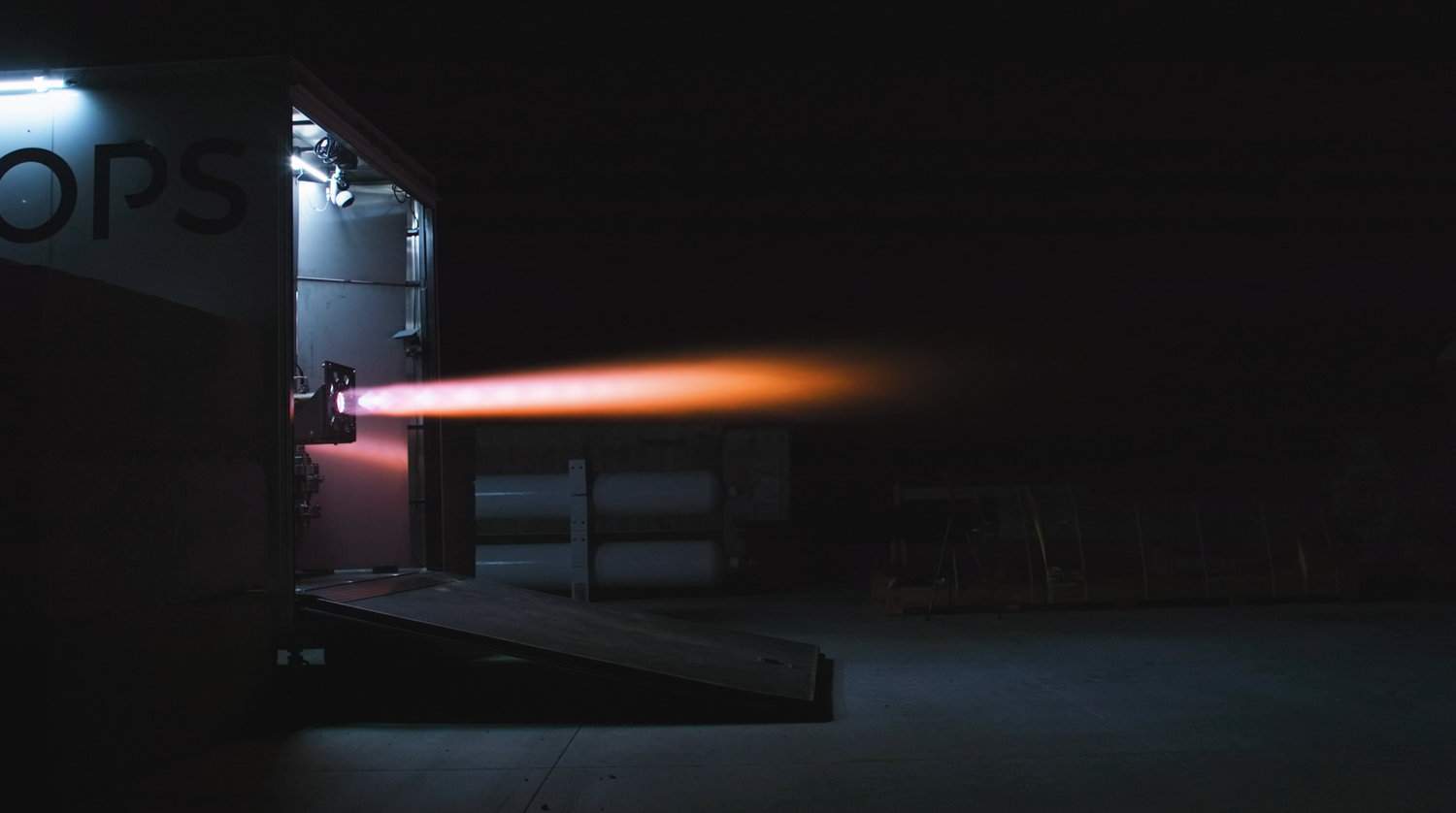
Orbital Operations is developing a first-of-its-kind, high-delta-V, high-thrust space vehicle with an onboard cryogenic propellant management system.
Within 24 hours of setting up Revel, the company ran 40 hotfires in a single day. Since then, Orbital Operations’ lean team of one full-time propulsion test engineer supported by a rotating group of interns, has cut the time between tests from hours to minutes and scaled its test program, all without needing a single software engineer.
The challenge
Before Revel, Orbital Operations had never run a single test. The team had no data recording capabilities and no automated way to run a sequence.
The existing software options on the market were either clunky or built around the assumption that a dedicated software engineer would be there to run them: a mismatch for a small team that needed to move immediately. Every hour spent wrestling with unreliable or overly complex tooling was an hour not spent testing hardware. And for a team this size, there was no dedicated software engineer to absorb that burden.
Orbital Operations needed a platform that a single propulsion test engineer and a bench of interns—many with no prior test software experience—could learn immediately, integrate with their existing hardware, and trust to control fast-moving, high-stakes hot-fire tests.

Before Revel, we had never run a single test. We had no data recording capabilities.
Ross Doherty
Co-Founder + COO — Orbital Operations
How Revel delivered
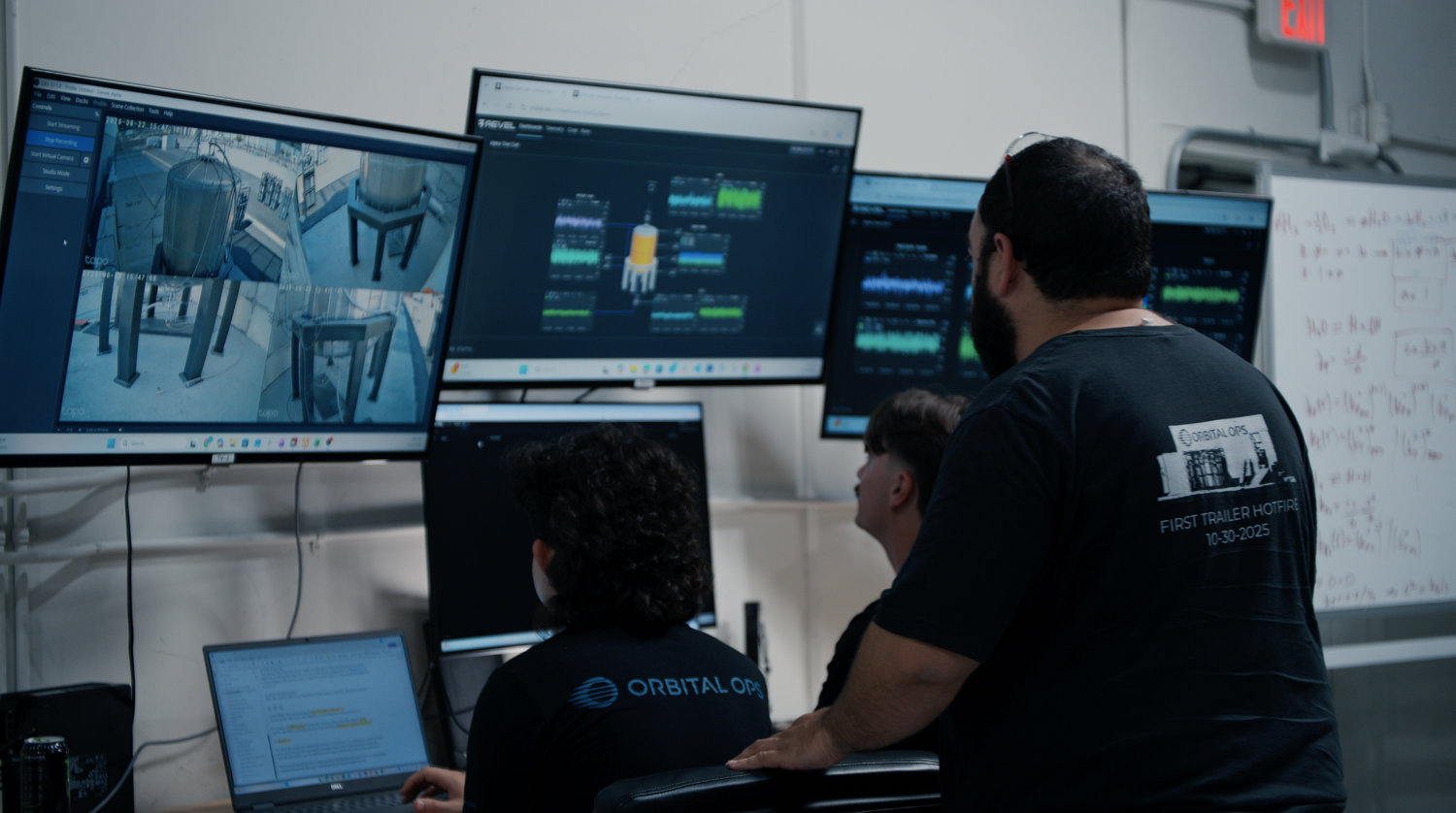
For Orbital Operations, the decision was quick. As Ross Doherty, Co-Founder + COO, recalled: "All it took was one demo and it was like: this is exactly what we need. We were able to integrate the box within 24 hours. We were running 40 tests in one day." Once the box was in-house, integration with their existing hardware was fast and simple. The team went into Revel's hardware configuration, set up their devices, and was hot-firing the very next day.
All it took was one demo and it was like: this is exactly what we need. We were able to integrate the box within 24 hours. We were running 40 tests in one day.
Ross Doherty
Co-Founder + COO — Orbital Operations
That speed extended to the people running the tests, not just the hardware behind them. Stefan Salaices, a Test Engineering Intern with no prior experience on the platform, independently stood up an entire test stand, building the GUI for a full rocket engine test stand in a matter of hours. As Stefan described it: "It was pretty straightforward. All I had to do was press the edit button, put things where I wanted them, type in a couple things, and it just worked like magic."
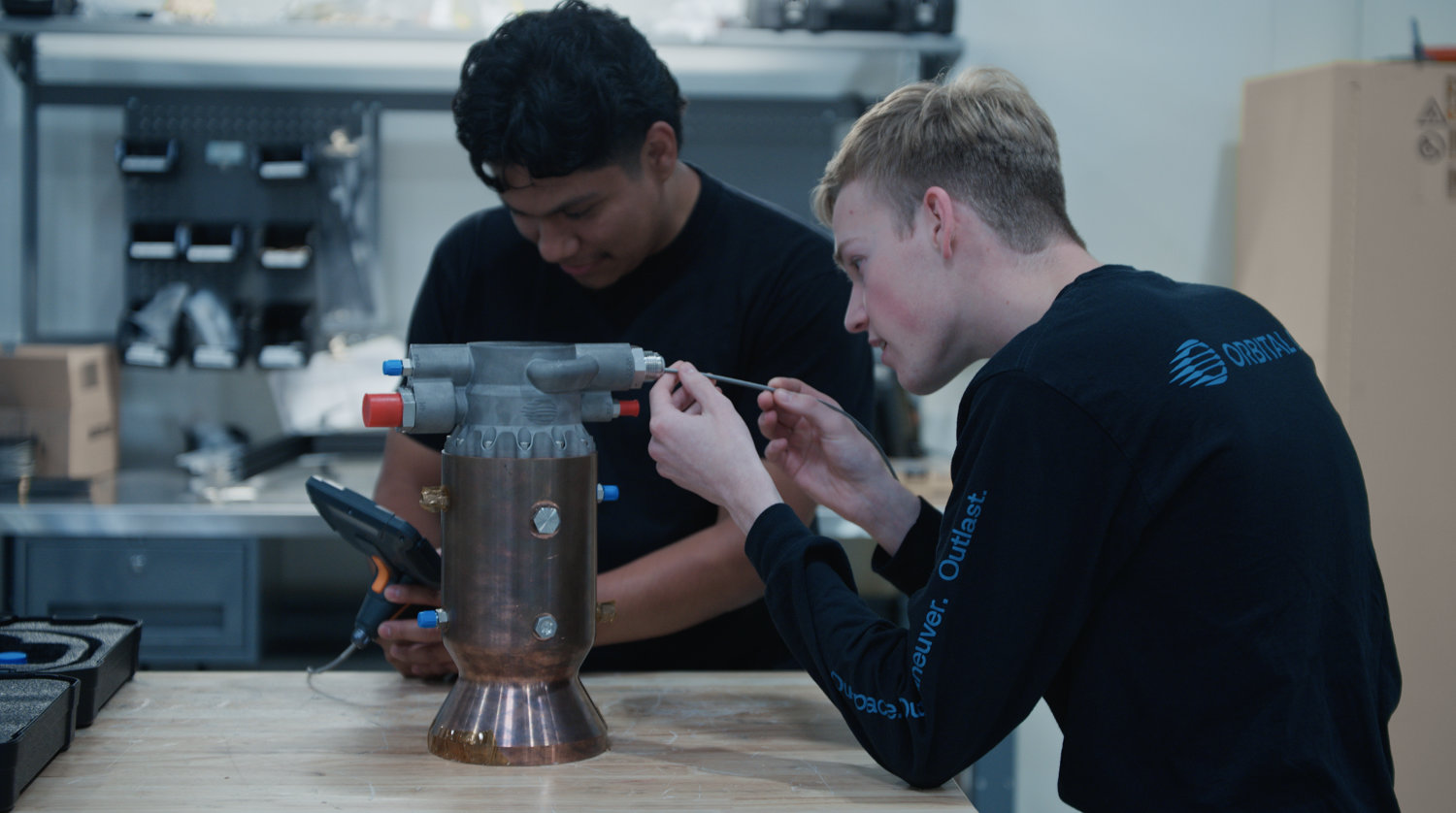
I had no experience with that before, and I was able to stand up a whole test stand myself ... it just worked like magic.
Stefan Salaices
Test Engineering Intern — Orbital Operations
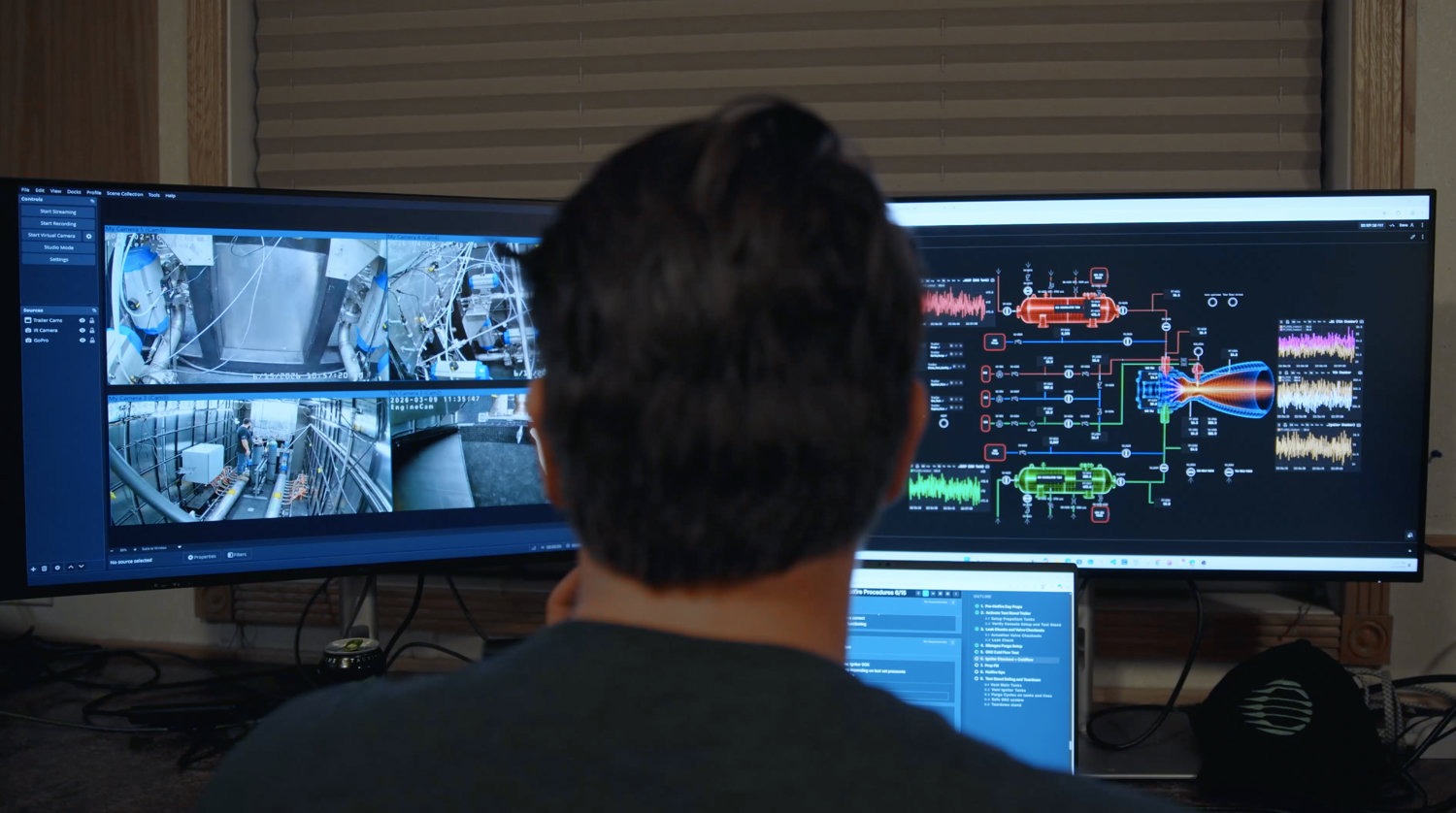
With Revel in place, sequence changes that once required specialized support could be made instantly, and the team was back up and running immediately. Dane Patten, the team's single full-time Propulsion Test Engineer, described the shift: "After adopting Revel, our cadences between tests went from a matter of hours down to a couple of minutes. Simple changes to sequences could be done with two clicks of the button, and we were up and running again."
Nico Montoya, Founding Engineer, framed why that matters: "In the rocket industry, test cadence is everything: test quickly, look at your data, recycle, and get back into test. Getting that cadence up by not having software slow you down is huge." Revel replaced the work that would otherwise have required multiple dedicated test and software engineers, freeing the team to focus on hardware instead of chasing software issues.
In the rocket industry, test cadence is everything. Getting that cadence up by not having software slow you down is huge.
Nico Montoya
Founding Engineer — Orbital Operations
Precision, reliability, and ROI
Revel's precision matters as much as its speed. As Nico put it: "There's only one thing you can control on a rocket engine, and that's the valves — and the thing that controls the valves is the software. Revel allows us to control these valves on the order of 1/1000th of a second, 1/100th of a second, and align that timing so that we can control these monsters of an engine, and control fire."
The reliability matters just as much. Nico again: "In the past, we used to call them 'software goblins.' 50% of the time, an issue was either something out on the test or a 'software goblin.' Now, the fact that I know those are not a thing anymore, and I can completely focus on our physical hardware, speaks volumes for us."
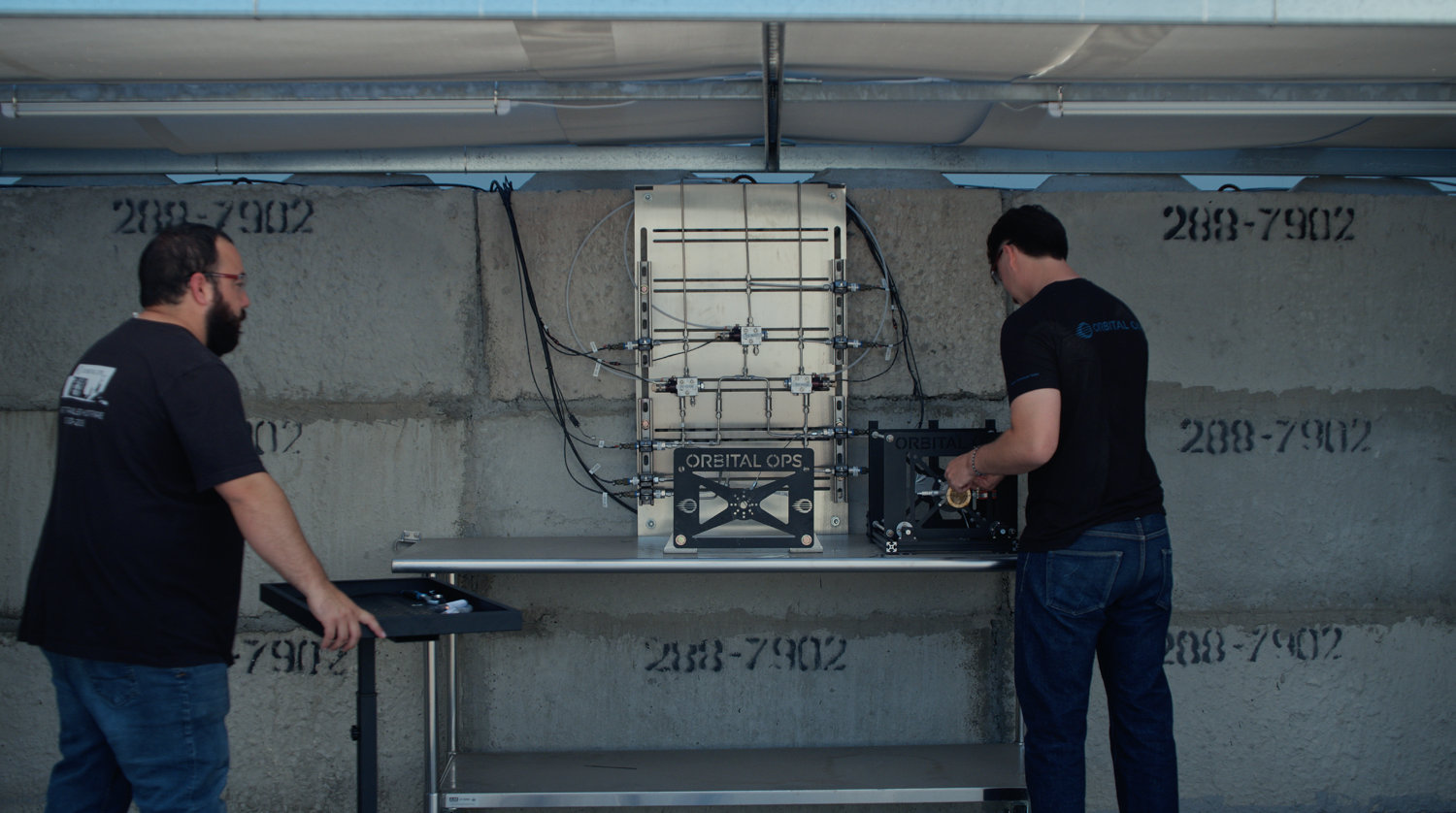
Speed, precision, and reliability all add up to the same bottom line: engineers the team never had to hire. Dane Patten, the team's propulsion test engineer, summed it up: "The ROI of Revel has been tenfold since we've got it. Not having to hire a dedicated person to run all this has been super crucial in letting us go faster, build better, and focus on the things that really matter — the development of this vehicle."
The ROI of Revel has been tenfold. Not having to hire a dedicated person to run all this has let us go faster, build better, and focus on what really matters — the development of this vehicle.
Dane Patten
Propulsion Test Engineer — Orbital Operations
Impact and results
+ 24-HOUR INTEGRATION
Orbital Operations got the Revel box running in a matter of hours and was hot-firing the very next day, with no dedicated software engineer on staff.
+ HIGH-CADENCE TESTING
The team ran 40 tests in a single day, cadence between tests dropped from hours to a couple of minutes, and one campaign ran nearly 70 to 100 igniter tests in two days.
+ ZERO-EXPERIENCE ONBOARDING
A Test Engineering Intern with no prior experience stood up a full rocket engine test stand and GUI independently, in a matter of hours.
+ INTERNS DOING ENGINEERS’ WORK
Interns have built full auto-sequencing cadences and GUIs, and individually designed and built a regeneratively cooled thrust chamber, an injector, and an igniter.
+ FEWER SOFTWARE FAILURES
"Software goblins" that once caused roughly half of test-day issues are largely eliminated, freeing engineers to focus on hardware.
+ PRECISE, RELIABLE CONTROL
Valve timing control on the order of hundredths and thousandths of a second gives the team confidence during live hot-fire testing.

Ross Doherty, Co-Founder and COO, captured the overall impact: "We are developing a rocket engine. If we did that without Revel, I don't think we would have been anywhere near where we are today."
Without Revel, I don’t think we would have been anywhere near where we are today.
Ross Doherty
Co-Founder + COO — Orbital Operations